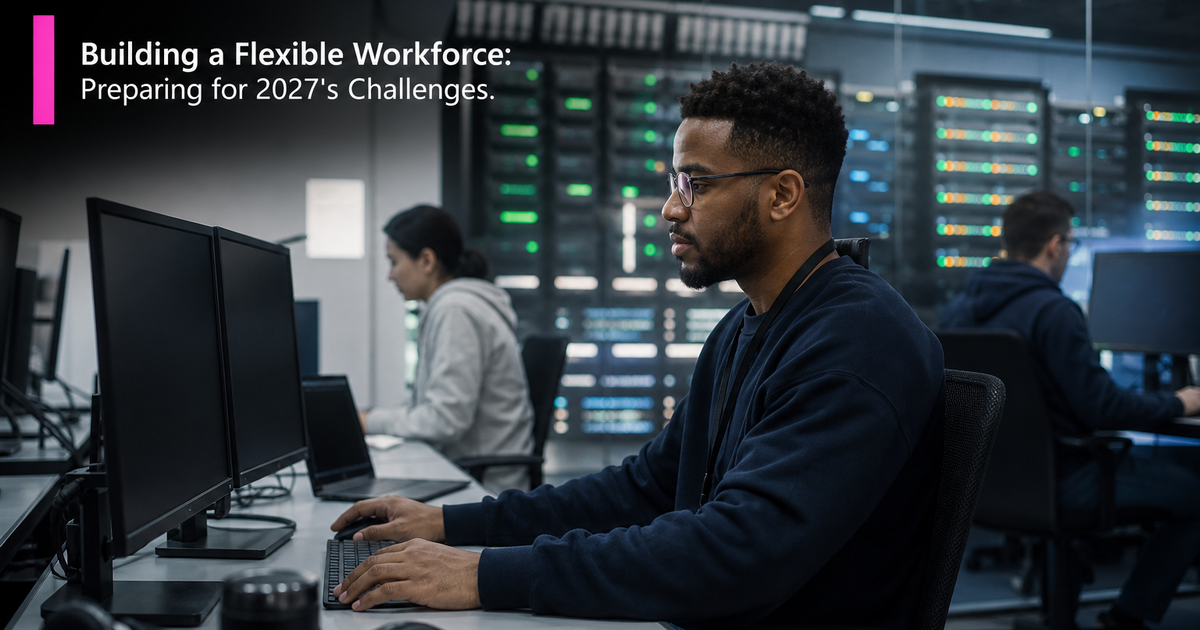
Enterprise IT leaders are facing a timing problem. Project scopes shift between planning cycles, a cloud migration gets pulled forward, a security initiative jumps ahead of a data platform build, and hiring still runs on a schedule set a year earlier. Building a flexible workforce is less about adding perks and more about planning discipline that keeps pace with changing technology priorities. Organizations that adjust their workforce models now will be better positioned as 2027 approaches.
Flexible Workforce Planning Starts With Your Current Plan
Fixed headcount plans assume a stable roadmap, and few enterprise roadmaps stay stable for a full budget year. When priorities change midyear, leaders either stretch existing staff past capacity or open requisitions that take months to fill. Neither option moves the initiative forward.
Consider a hypothetical data platform team of six, approved in January. By summer, the business launches a forecasting program that needs two engineers with model deployment experience. No budget line exists, and the current team is committed to scheduled migrations. Either the forecasting work waits or the platform roadmap slips.
That is why 2027 planning should begin now. Specialized roles take longer to fill, contract vehicles need time to set up, and next year’s budget conversations are likely already underway.
Remote Work Changes Where Specialized Work Gets Done
Remote and hybrid models have widened the talent pool well beyond traditional metro hubs. A cloud security engineer might work from Denver while the operations center sits in Texas.
It also raises new questions. Access becomes a provisioning and identity issue, and oversight shifts to reviewing deliverables and handoffs. Successful teams define three things early: who owns each deliverable, how access is granted and revoked, and what overlap exists across time zones. Cloud computing talent is most productive when those expectations are clear from the first week.
Close Skill Gaps With a Flexible Workforce Model
Most enterprises get the best results by combining three coverage layers:
-
Internal teams hold institutional knowledge of proprietary systems, regulatory obligations, and business logic.
-
Contingent talent fills specialized capacity for defined periods, such as a platform migration or AI rollout.
-
Managed delivery covers outcome-defined work where a partner is accountable for results.
Problems start when one model is applied to every gap. A security backlog that needs experienced threat hunters calls for a different structure than a multiyear data governance program. Reviewing enterprise cybersecurity staffing options alongside internal capacity helps leaders make ownership decisions deliberately.
Contingent and managed models are not right for every role. Work that depends on deep knowledge of legacy architecture usually belongs with permanent staff.
Flexible Workforce Steps to Take This Quarter
Map Roles by Business Criticality
Tag each role supporting your 2027 roadmap as core, flexible, or burst. Core roles hold knowledge and decision rights that stay in-house. Flexible roles scale with demand. Burst roles cover short, specialized needs with a defined end date.
Select an Engagement Model for Each Role
Permanent placement suits long-term ownership. Contract placement suits defined capacity needs. SOW-based delivery suits work with clear deliverables, where the partner carries accountability for outcomes. Involve procurement and legal early, because contract structure determines where risk sits.
Set a Review Cadence
Hold a quarterly checkpoint that compares the workforce plan to actual project timelines. Which roles were filled on schedule? Which initiatives slipped? Small quarterly corrections are far less disruptive than a rebuild in the middle of a budget cycle.
Start the 2027 Workforce Conversation Early
The enterprises that handle 2027 well will not have the most open requisitions. They will understand their critical roles, choose the right engagement models, and build review habits before pressure arrives. If next year’s roadmap depends on specialized cloud, cybersecurity, data, or AI talent, now is the time to test your structure. Talk with GTN Solutions about building a flexible workforce around your specific roles and priorities.